Saturday, July 23, 2011

Servant Leadership- An Altruistic Approach

Recently came across this word ‘Altruistic’ wanted to understand the deeper meaning of the same and its day to day relevance in our work culture. Altruistic means to show unselfish concern for the welfare of others, so an altruistic approach would be a selfless one. Now how can we apply this to our corporate world? - Is it by serving others - customers, business associates or co- employees.

Practicing altruism is the real source of compromise and cooperation; merely recognizing our need for harmony is not enough. A mind committed to compassion is like an overflowing reservoir - a constant source of energy, determination and kindness. This is like a seed; when cultivated, gives rise to many other good qualities, such as forgiveness, tolerance, inner strength and the confidence to overcome fear and insecurity. The compassionate mind is like an elixir; it is capable of transforming bad situation into beneficial ones. Therefore, we should not limit our expressions of love and compassion to our family and friends. Nor is the compassion only the responsibility of clergy, health care and social workers. It is the necessary business of every part of the human community.

For this one has to develop a spiritual temper. Pure altruism is giving without regard to reward or the benefits of recognition. The concept has a long history in philosophical and ethical thought; materialistic struggle for personal gain is no way to make the world a better place. We should try to ignore the monetary aspect and put people at the heart of what we do, concentrating on what will be of real benefit to others. And if we are serving honestly money should follow.

Many illnesses can be cured by this one medicine of love and compassion to others. These qualities are the ultimate source of human happiness, and need for them lies at the very core of every being. Unfortunately, love and compassion have been omitted from too many spheres of social interaction for too long. Usually confined to family and home, their practice in public life is considered impractical, even naive. This is tragic. The practice of compassion is the most effective way to pursue the best interest of others as well as our own.

What ever is a conflict - an altruistic approach is frequently the sole means of resolving it. At times, when a resolution seems impossible, both sides should recall the basic human nature that unites them. This will help break the impasse and, in the long run, make it easier for everyone to attain their goal. After all we have to keep in mind our interdependent nature.

We can always learn from the nature by observing small insects, ants and bees. The laws of nature dictate that bees work together in order to survive. As a result, they possess an instinctive sense of social responsibility. They have no constitution, laws, police, religion or moral training, but because of their nature they labor faithfully together. In general the whole colony survives on the basis of cooperation. Human beings, on the other hand, have constitutions, vast legal systems and police forces; we have religion, remarkable intelligence and a heart with great capacity to love. But despite our many extraordinary qualities, in actual practice we lag behind those small insects; in some ways, I feel we are poorer than the bees.

When we are unable to share, we suffer from lack of love, loneliness, for instance, millions of people live together in large cities all over the world, but despite this proximity, many are lonely. Some do not have even one human being with whom to share their deepest feelings, and live in a state of perpetual agitation. This is very sad. We are not solitary animals, if we were, why would we build large cities and towns? But even though we are social animals compelled to live together, unfortunately, we lack sense of responsibility towards our fellow humans. Does the fault lie in our social architecture? Is it our own external facilities - our machines, science and technology? Or is it just a smile away? Just away by a spontaneous feeling of empathy.

I believe that despite the rapid advances made by civilization in this century, the most immediate cause of our present dilemma is our undue emphasis on material development alone. We have become so engrossed in its pursuit that, without even knowing it, we have neglected to foster the most basic human needs of love, kindness, cooperation and caring. The development of human society is based entirely on people helping each other. Once we have lost the essential humanity that is our foundation, what is the point of pursuing only material improvement?

Servant leadership puts emphasis on serving others, whether customers, employees, or community, as the number one priority in the business. Servant leadership emphasizes increased service to others, a holistic approach to work, promoting a sense of community, and the sharing of power in decision making. At its core, servant leadership is not a quick fix or magic bullet to organizational leadership. It is, however, a transformational approach to life and work and has the potential to create positive change throughout society.

Servant leadership deals with a reality of power in everyday life, its legitimacy, the ethical restraints upon it and the beneficial results that can be attained through the appropriate use of power. Servant leaders are those who serve with a focus on the others, the servant leader leads and serves with an altruistic approach. This leader also empowers others, acts with humility, exhibits love, leads with service, is trusting, and is a visionary for others.

Servant Leaders help others selflessly just for the sake of helping, which involves personal sacrifice, even though there is no personal gain. The traditional view of altruism as an unselfish concern for others often involves personal sacrifices; however the servant leader gets personal pleasure in helping others. This is the true understanding of altruism.

Tuesday, July 12, 2011

Inner Fitness

When we talk about inner fitness, it is not about any fitness regime concerned with health, we are concerned with inside calmness and inner stability, I believe that if this aspect of inner fitness is there health automatically follows. We have to make this inner stability, this peace as an integral part of our personality. This is from where the true leadership also begins.

The concept of inner fitness is directly related with spirituality and spirituality plays an important role in enhancing our professional lives. The real bottom line in business is spiritual and personal growth. As the business world becomes more complex and demanding, there is a need for a stronger foundation on which to build a professional life, job, or career. Principles that influence the quality of passionate work; how to absorb them into daily practice? Spiritual/ inner fitness increases energy, reduces absenteeism, improve sleep and mental outlook and overall health.

We live with so many wrong beliefs all of our lives, one of such beliefs I was living with was: "peaceful are those, who are weak, who are powerless. If I am calm and peaceful people will walk over me”. But this is not true it is a wrong belief, rather peace is actually for strong people, inner peace itself gives a lot of power, and rather anger depicts loss of power. In a leadership position one has to know the difference between assertiveness and submissiveness. Assertiveness indicates inner stability and putting your point straight forward, where as submissiveness creates turmoil inside and is represented with anger or fear outside. Fear paralyzes and one can not find the right solution.

There should be times when we should choose to be quiet because there is no benefit in getting angry at that situation. And if there is any task to be done, the request should be clear and straight forward. When we chose to be quiet, we shall be stable inside and can listen to the whole situation in a way finding, and solving the issue rather than messing it up further.

Now there is another wrong belief which most of us live with: “If I am quiet- I lost!” Question is what do I want to win? What is winning and losing? In the game of life we are all together we are not competing. If we have to loose something we have to loose our anger and fear; our jealousy and proud. Our life is our own choice- what we want? Then I win. I win over the illusion that life is not a race or a competition. My journey is my own, on this road of life, I am driving my own vehicle.

How do we as individuals and organizations survive and thrive amid tremendous change and transition? The key to dealing with transitions is having a changeless, principle-centered core. Learn to see change as a challenge, not as a threat. During a challenge we should learn how to develop our internal compass and use it as a source of security, guidance, wisdom and power.

Internal compass or inner fitness can be developed by following simple steps, number one is to let go of suffering, mental noise and anxiety. We miss so much when our minds are cluttered with events of the past and anticipation of the future. The energy we give to things that are not part of the present is wasted and blocks us from seeing and experiencing what is right in front of us.

When we have inner stability we can create the life we want not how others dictate or want our life to be. It is a life free from anxiety, disturbance and irritation. The right thoughts will create the right words, right words will create the right actions, and right actions will create the right harmony in our life. With right thoughts, actions and behavior we are creating a peaceful, content and happy life. Let us take out time to feel the love and support which already exists around us. Listen for the still, small voice within and be open and receptive to the answers we seek. Then the path we travel shall be filled with the fragrant sweet smell of roses.

Our peace and inner stability is checked the moment somebody shouts at us! Or the moment a challenging situation arises? How do we react at that time is the true test of all the lessons learnt, that is the true test on the scale of spirituality where we stand. In the small, small situations we face daily! Normally we shout – to attract attention, but if we show and have acceptance towards others, then why to waste our valuable energy in getting angry?

Step on the path of knowing thy SELF and we will reach greater heights of success, creativity and joy; feeling more spiritually radiant. I have heard that happiness resides within us and have believed it. I must say profound, to experience our true happiness and to find the place within us it radiates from, has nothing to do with people, places, or conditions in the external world.

When we see, and admit, our essential powerlessness to provide for ourselves what we believe can make us happy. This is a necessary stage in our spiritual development: to realize we don't have a clue how to help ourselves become whole. This discovery alone makes it possible for us to learn real patience and inner calmness.

Wednesday, June 29, 2011

Bhutan - Real Estate n Nature

A visit to Bhutan feels like a visit to the abode of Gods; the majesty and grandeur of the natural surroundings eludes one to a special environment where communion with the divine is possible through contemplation, connection and meditation. One gets irresistibly drawn towards these remote and rugged Himalayan Mountains in a personal search for wisdom, inspiration, solitude and happiness.

Bhutan tucked in the Eastern Himalayas, has preserved and still richly intact, its traditional lifestyle. Rather the modern secular life is being influenced and permeated with the traditional cultural life style.

Gross National Happiness (GNH)has been the overarching development philosophy of Bhutan as the concept has guided the country’s development policies and programmes. GNH suggests that happiness is the ultimate objective of development. It recognizes that there are many dimensions to development other than those associated with Gross National Product (GNP), and that development needs to be understood as a process that seeks to maximize happiness rather than purely economic growth.

The country believes that for a holistic development of the individual and society, it is essential that development achieve a sustainable balance between the economic, social, emotional, spiritual and cultural needs of the people. This has led to the declared objective of viewing development as a continuous process towards achieving a balance between the material and intangible needs of individuals and society.

The concept reminds the country that the means must always be considered in terms of the end and, therefore, every step in material development and change must be measured and evaluated to ensure that it will lead to happiness, not just more development.

The four major areas as the main pillars of GNH:
1. Economic growth and development.
2. Preservation and promotion of cultural heritage.
3. Preservation and sustainable use of the environment.
4. And Good governance

Guided by the ideas of Gross National Happiness (GNH), Bhutan has been making steady progress in every sector toward the goal of modernization. Hydroelectric power, economically the most signification sector for Bhutan’s goal of self-sustaining development, has grown impressively. The education, social services and health sector have made great strides forward and continue to be the most important social components of the country’s development programme. The government‘s fiscal situation has been improving steadily. Progress has been made in the development of human resource and the legal infrastructure.

Bhutan the land of thunder dragon, nestled between India and Tibet, the exquisite mountain kingdom has been isolated and protected for centuries by mighty Himalayan peaks, with daily life rituals remaining sacred and the landscape is relatively undeveloped.

Tradition and Buddhism infuse every facet of life, from jingling brass bells of prayer wheels to ornate monasteries perched high above terraced rice paddies. Change is coming to Bhutan, but the country isn’t blindly adopting modern western culture. After all, Bhutan still defines prosperity by Gross National Happiness, measuring well being rather than consumption. This trip to Bhutan, provided a unique opportunity to see how the Bhutanese balance development and tradition, and it was enhanced by experienced local guides who proudly share their country’s culture with us. One finds something akin to Bhutan's wonders in the beauty of remote monasteries and in interactions with Bhutanese people.


Friday, May 20, 2011

Tide Of Change

Recently took up a new role and responsibility with a real estate company at a new position. Real estate industry in India- the main excitement of this industry is that it is changing rapidly, and another major attraction here is of helping make although miniscule but some little contribution to the growth and infrastructure development of the nation. This made the role a terrific opportunity. Being a new company in this industry my role is more as the growth driver, the challenger, and the visionary, cultural leader, customer champion, focused on people and values, and very much the public face of the organization. The role involves execution, strategy support, growth enabling, productivity and process transformation, as well as compliance.

By the time we reach our forties we know a great deal more about life than we did when we began our careers. This wisdom and knowledge, as well as the insight into myself, was an important catalyst for this career move. When we begin our working careers most of us work with a singular drive to succeed in competitive careers that offer high wages. Yet, later in life, we develop a grasp on what really compels us to remain productive in the company. Later on the career goals are no longer driven by high wages and a certain status instead it is replaced by a desire to find passion, enjoyment and a sense of accomplishment from our work. Because of this, the challenge becomes more like an adventure as we set about developing new skills growing our self along with our work. And let us not forget that we haven't even reached the halfway point of our most productive years.

In this fast-changing times of doing business, creativity should be on top of the list of qualities of a good leader. What has been effective in the past years might not be effective tomorrow, so creative leaders tend to weigh in the methods used as well as the results obtained in the past and then try to ‘custom-fit’ it to the present situation to obtain the best possible results. I am trying to be as creative and as flexible as that.

Integrity and Influence can put us to the top but Creativity makes us stay on top. I think slowly but surely, modern managers are realizing that the complex situations they face require not only creativity, but also inquisition and even more recently a new focus on socially responsible practices to meet the increasing demands of the multifaceted customer. Another aspect here is that creativity is strongly needed to be able to lead the young ones that are no still attending school.

Change is the law of nature, and one’s growth depends a lot upon, how accepting and welcoming one can be towards this change. When we are caught up in the tide of change and there is no turning back, might as well adjust, adapt and mould ourselves as per the requirement of the situation. With this attitude if we enter into new role, success is not far away. Many opportunities await the motivated individual who wants a change.

Although in a new set up but in any business or company, it's about two things: the people and the product. Naturally, there has to be a great deal of focus on the product itself, especially in terms of making sure it's competitive with the offerings out there right now. We need to have the features that industry demands and accepts, bringing future value to our customers. Behind every great company, there are great people. My hope is to give the current staff the resources they need to be successful, and to identify new people that can take this company to the next level as we grow. I strongly believe that there is great capacity in every individual and each one has there own set of strengths and weaknesses. As a leader one has to be accepting and humble enough to this fact and curious enough to selflessly and compassionately connect with others in a desire to bring about the best in them.


Wednesday, April 27, 2011

The Beautiful City Of Venice, Italy

Millions of people head to Venice every year for one simple reason; it is like no other city on Earth. The city offers fantastic architecture, wonderful food, unique shopping opportunities, and great historical sites. Everything in Venice is so picturesque. It is easy to get lost in this city of more than 100 islands united by over 400 bridges and many waterways. Venice is an artistic and architectural masterpiece filled with palaces from the Renaissance and the Gothic and Byzantine periods. It is known as one of the world's most extraordinary beautiful and unique cities.

Venice is a beautiful and unusual city with such breathtaking sites, smells and sounds. It's a place full of energy that everyone should experience at least once in their lives.


Some of the many outstanding attractions worth visiting in Venice include one of the first things one sees as soon as one is out from the Santa Lucia station-The San Giogio Maggiore. This is a church that was set upon the tiny island across from Venice and it's the dream work of architects everywhere. The structure is the creation of Andrea Palladio who built the church in 1566. It sports a classical design which includes a line of columns that separate the Austere Choir loft from the alter.

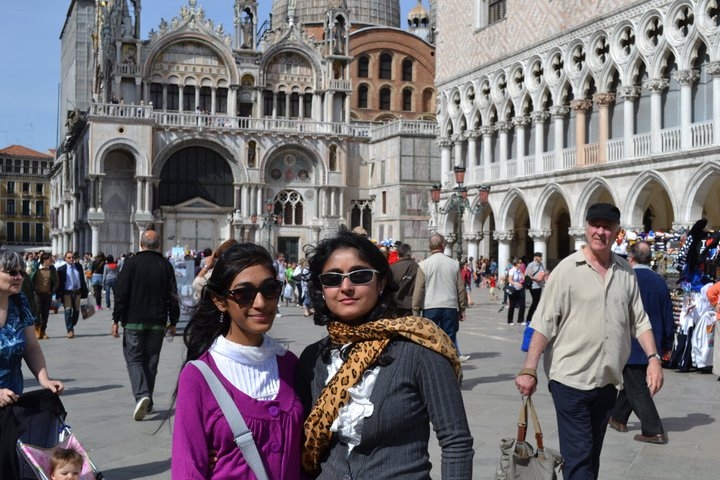
Another not to miss site is Saint Mark’s Basilica, which is the most renowned church in Venice. It's named such because the remains of St. Mark, who is the patron saint of the city of Venice, are kept there. The church actually sits in the eastern side of St. Mark's Square. This is the heart and soul of Venice and it's one of the most desired photo attractions for tourists in the world.


Other attractions include:
Burano, San Rocco,

Doge’s Palace,
The Grand Canal,
Santa maria dei Miracoli,
Campo Santa Margherita,
Rialto Market,
Anyone with any appreciation of history and architecture will absolutely love a visit to Venice. The city offers the kinds of memories and experiences that cannot be had anywhere else.

Among those who've seen it in person, the conclusion is unanimous: Venice is the most beautiful city in the world, and the only one that can truly be described as unique. Each building is a work of art, with their beauty enhanced when reflected on the canals that cross the city. Its magical scenery is fascinating and breathtaking at first sight, evoking the feeling of entering the setting of a real-life fairy tale. It's perhaps even unfair to all other cities to call Venice a city, as it is a place unlike any other that no other can compare to.

When one is in Venice you can walk for hours or days and you will find something different every time.Places in Venice can be difficult to find if you do not carry a map. It is easy to find the Saint Mark Ducal Palace and the Bridge of Rialto but rest of the beautiful and mysterious Venice might elude you. Get lost in the beauty of its streets and enjoy.